
High-Pressure Parallel Multi-Cell Reactors
TENNAD designs and manufactures high-pressure parallel multi-cell reactors for catalysis, catalytic hydrogenation (H₂), catalyst screening and parallel chemical synthesis. The Multicell Pressure Reactor (MPR) range is available in standard 2- or 4-position configurations, as well as custom multi-position configurations with 6, 8, 10 or 12 positions. These systems allow laboratories to compare several experiments at a common temperature and, depending on the configuration, with shared or independent pressure in each cell. The reactors can be configured for experiments involving hydrogen (H₂), carbon dioxide (CO₂) or other suitable process gases and fluids. Depending on the configuration, they can be used with or without a HotBlock heating block.
High-Pressure Parallel Multi-Cell Reactors – 2 to 12 Positions
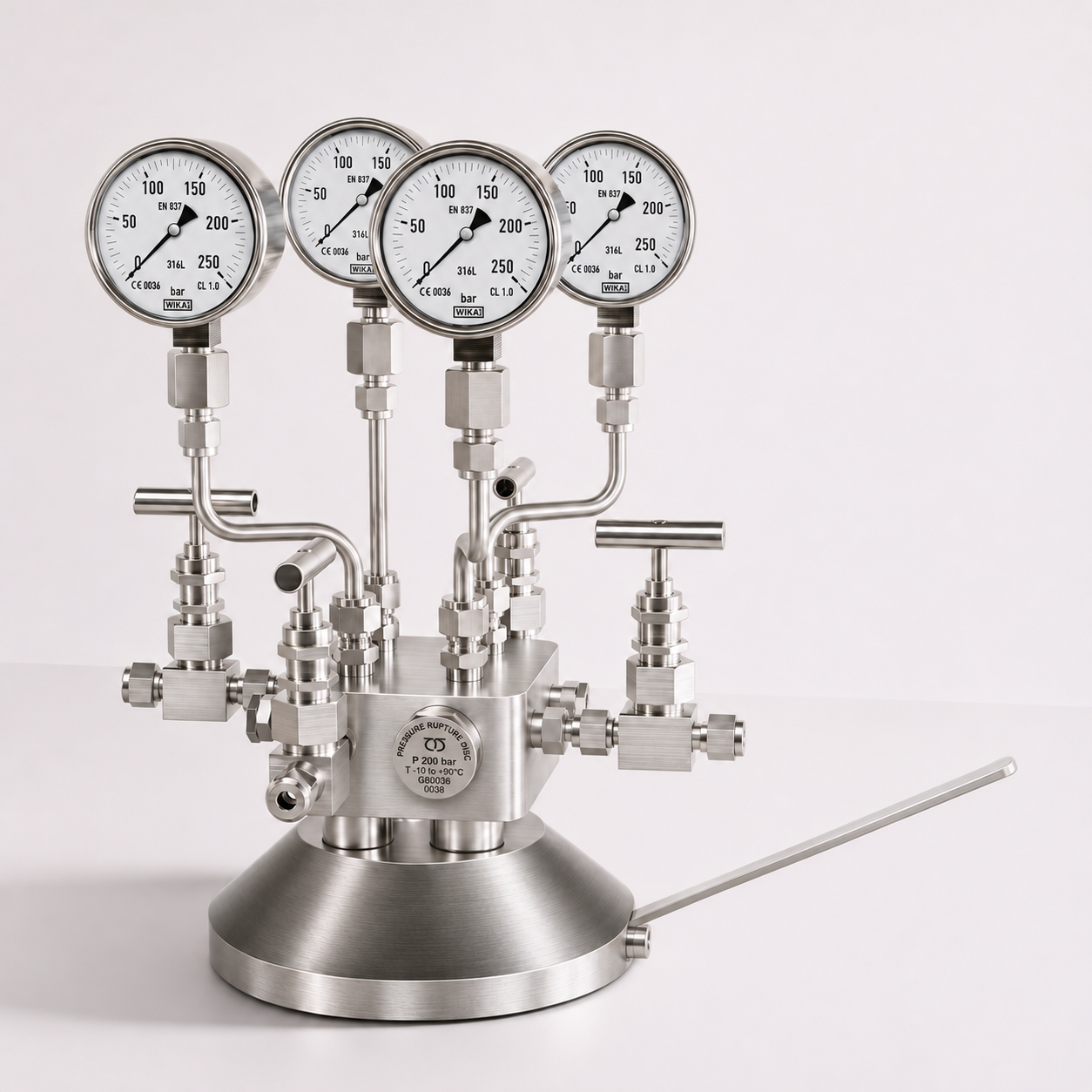
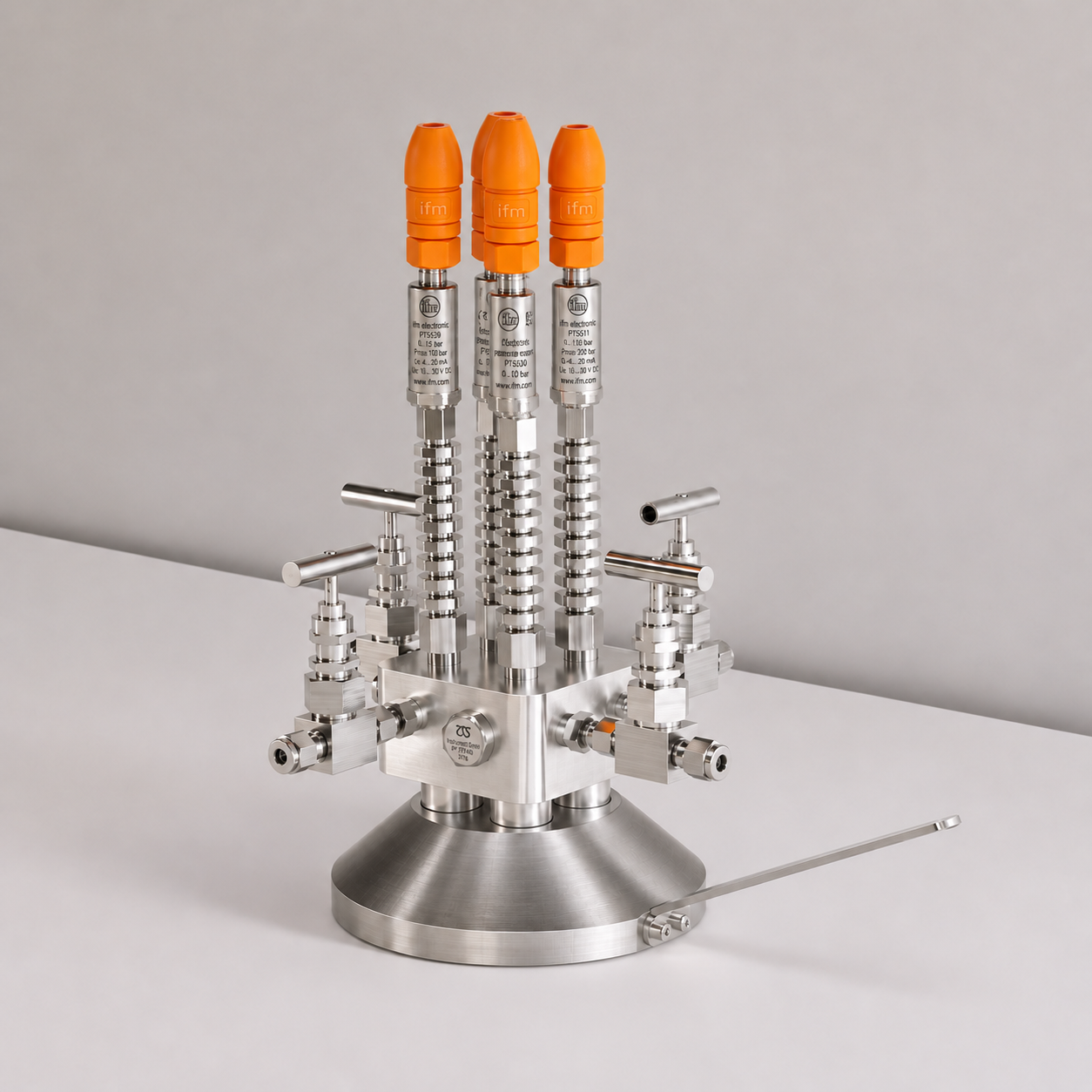
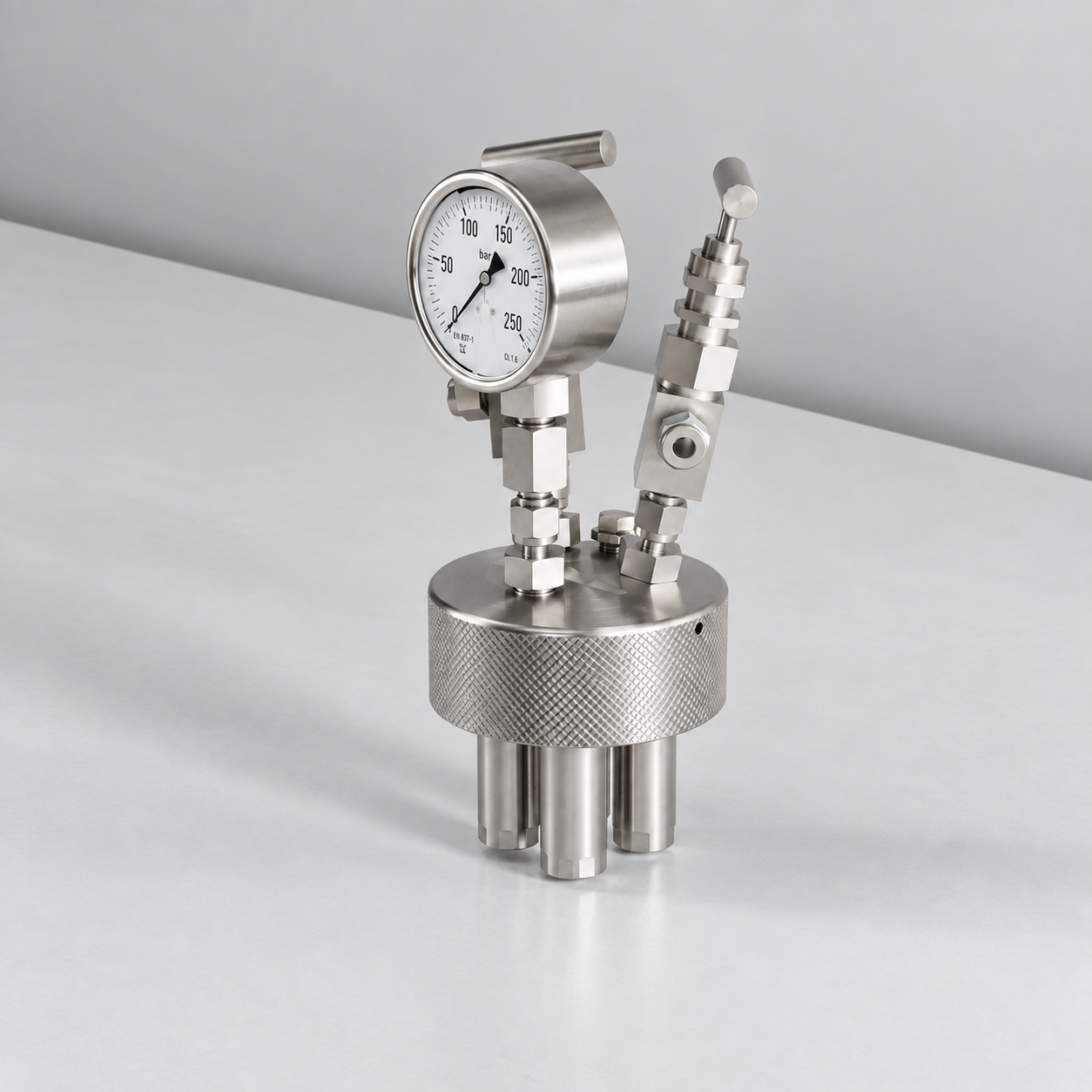
MPR multi-cell reactor datasheet – TENNAD
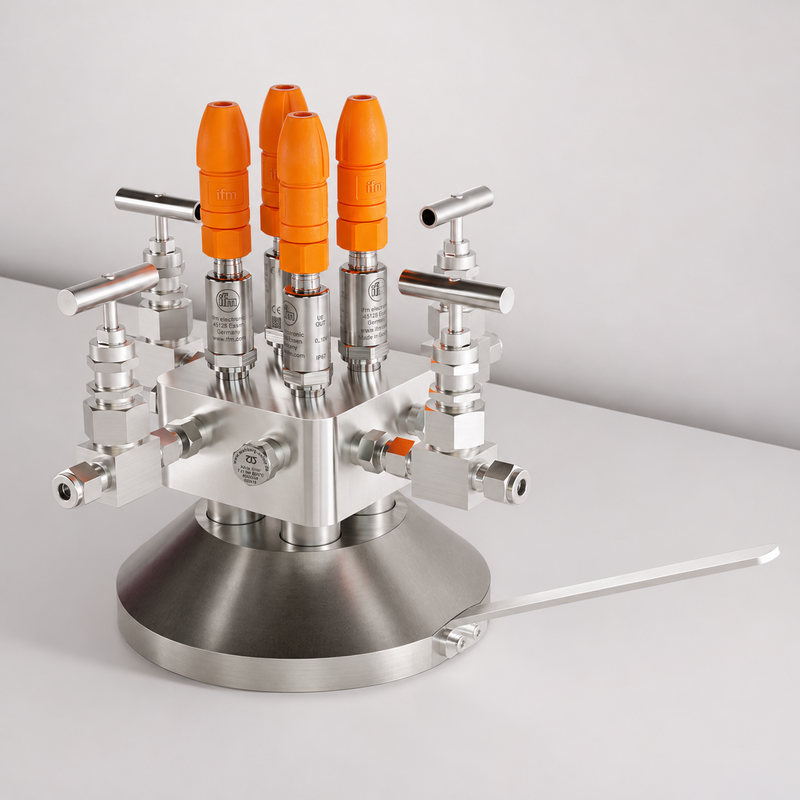
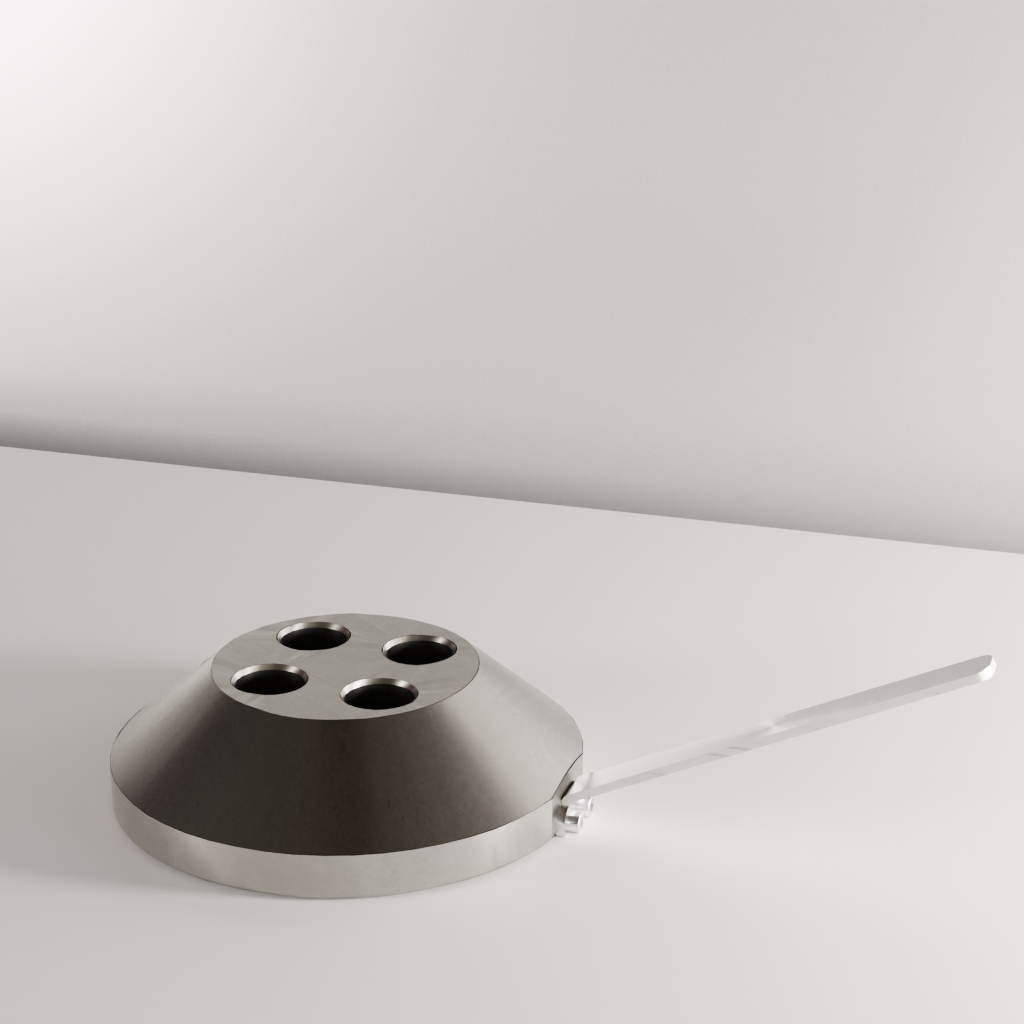
MPR multi-position reactors are available in standard versions with 2 or 4 cells of 10 mL each (other volumes available on request). TENNAD also manufactures custom parallel reactors with 6, 8, 10 or 12 positions for experimental campaigns requiring more cells. These systems make it possible to compare several catalysts, formulations or reaction parameters simultaneously. In standard versions, all positions operate at a common temperature; depending on the model, pressure may be common to all cells or independent in each cell. Cell volumes and operating arrangements for custom-built versions are defined according to each project.
Standard versions are offered with maximum working pressures of 50, 100, 150 or 200 bar and operating temperatures of up to +250 °C, depending on the configuration. Specifications for reactors with 6, 8, 10 or 12 positions are determined individually for each custom-built system. Cells and process-wetted components are available in 316 stainless steel or Hastelloy C276. Materials and accessories are selected with consideration for the process fluid.
Experiments may involve, in particular, hydrogen (H₂), carbon dioxide (CO₂), nitrogen (N₂) or argon (Ar). Compatibility with each process gas, solvent or mixture must be confirmed for the selected configuration.
Standard Multi-Cell Reactors and Custom Multi-Position Systems with up to 12 Cells
Standard MPR models with 2 or 4 cells allow two or four low-volume experiments to be carried out simultaneously. Custom versions with 6, 8, 10 or 12 positions are also available to increase the number of parallel experiments. In standard models, heating and stirring are provided by a standard heating magnetic stirrer, making the system easy to integrate into laboratory and R&D environments. Heating and stirring solutions for custom-built systems are defined according to the project.
- Number of cells: 2 or 4 as standard; 6, 8, 10 or 12 custom positions
- Volume per cell: 10 mL for standard models; other volumes according to the project
- Maximum working pressure: 50, 100, 150 or 200 bar depending on the standard version; to be defined for custom models
- Pressure configuration: shared or independent depending on the standard model; to be defined for custom systems
- Temperature: common to all positions on standard models; custom configuration to be defined
- Minimum operating temperature: −100 °C depending on the standard configuration
- Maximum operating temperature: +250 °C depending on the standard configuration
- Available materials: 316 stainless steel or Hastelloy C276
- Heating and stirring: heating magnetic stirrer for standard models; project-specific solution for custom systems
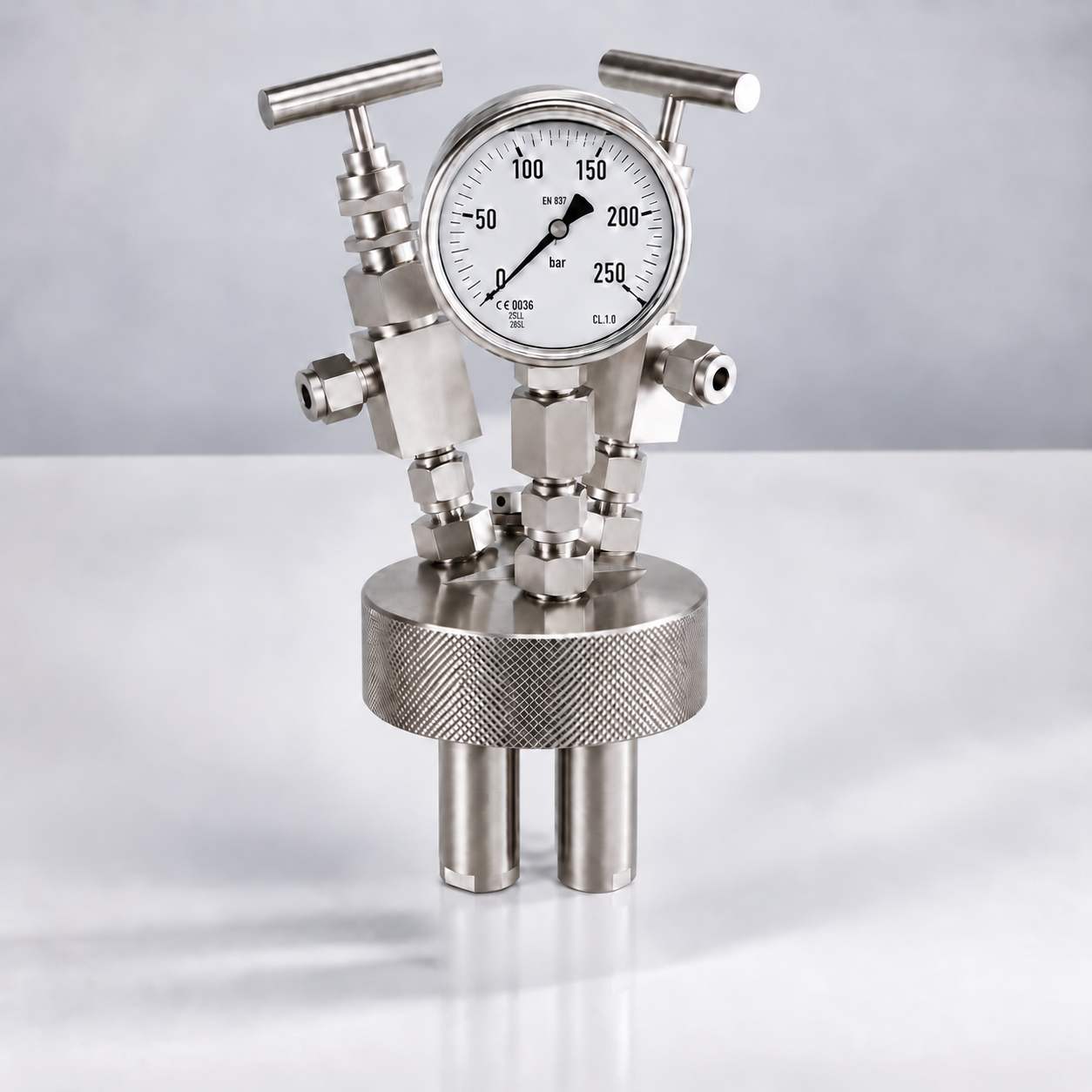
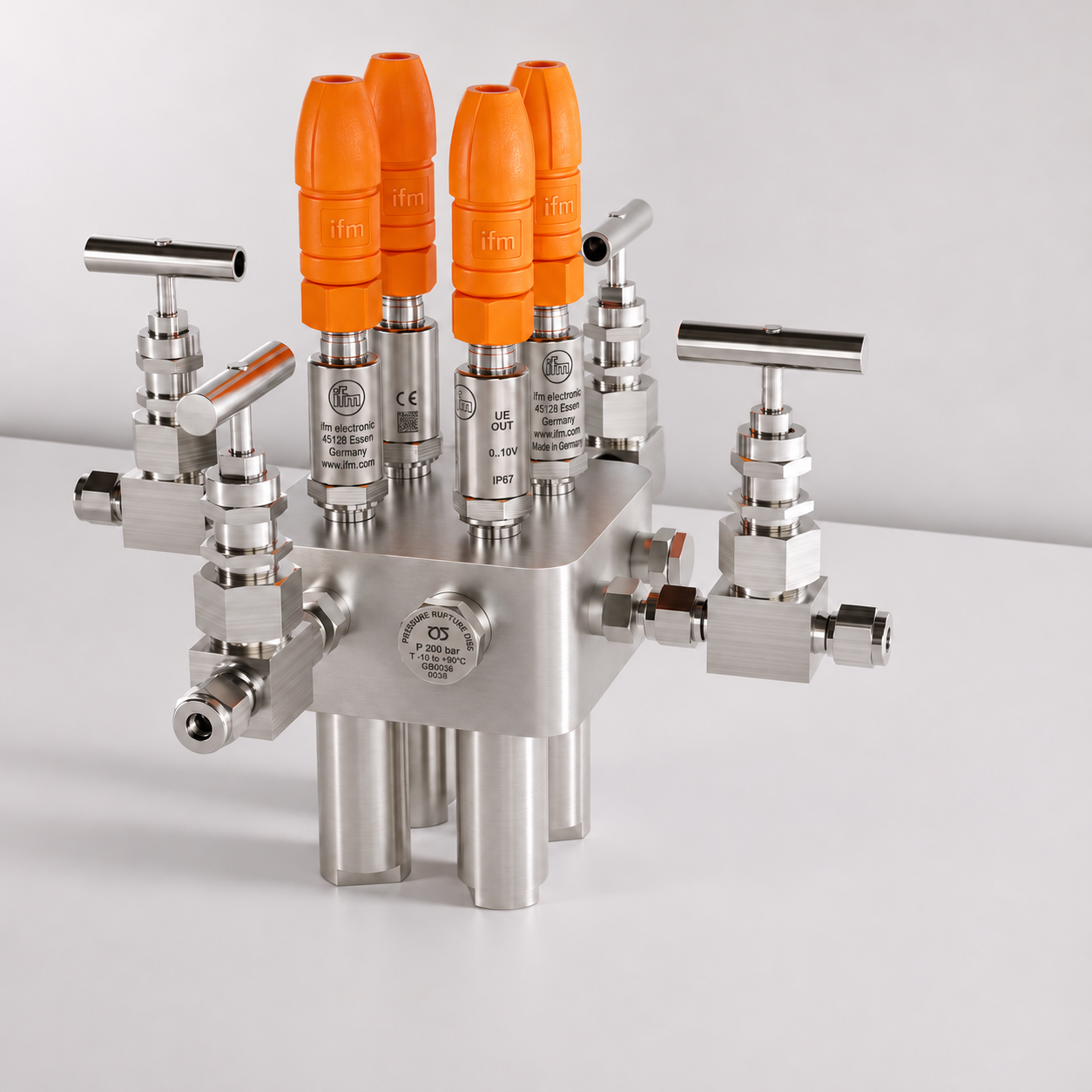
MPR high-pressure multi-cell reactor – four-position example
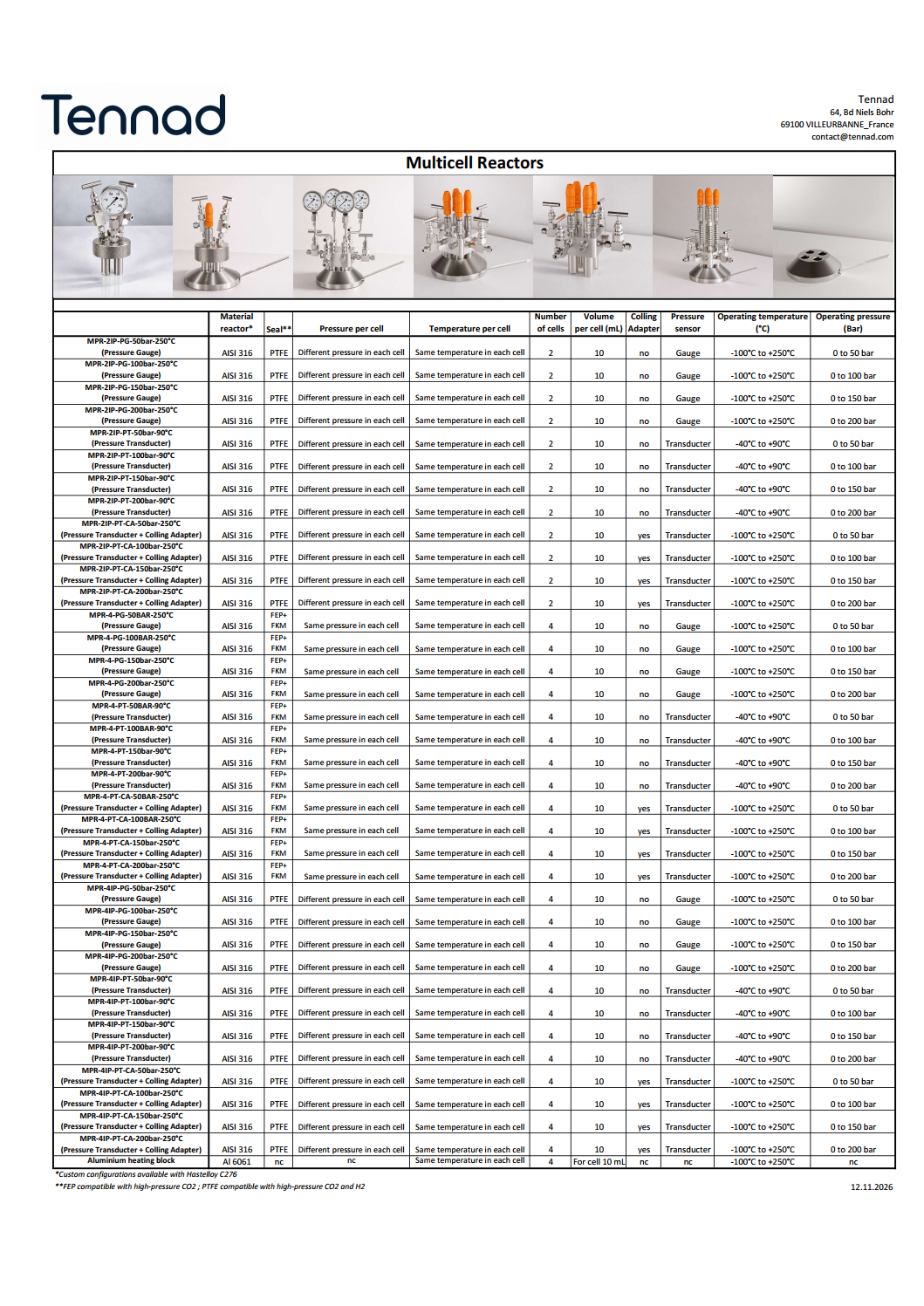
Comparison of the 9 Standard MPR Configurations with 2 or 4 Positions
The table below presents the nine standard MPR configurations with 2 or 4 positions, according to pressure management, the cooling adapter, pressure measurement and operating temperature range. Custom multi-position reactors with 6, 8, 10 or 12 positions are designed on request and are not included in this table.
| MPR Reference | Pressure per Cell | Number of Cells | Cooling Adapter | Pressure Measurement | Operating Temperature |
|---|---|---|---|---|---|
| MPR-2IP-PG | Independent pressure in each cell | 2 | No | Pressure gauge | −100 °C to +250 °C |
| MPR-2IP-PT | Independent pressure in each cell | 2 | No | Pressure sensor | −40 °C to +90 °C |
| MPR-2IP-PT-CA | Independent pressure in each cell | 2 | Yes | Pressure sensor | −100 °C to +250 °C |
| MPR-4-PG | Same pressure in each cell | 4 | No | Pressure gauge | −100 °C to +250 °C |
| MPR-4-PT | Same pressure in each cell | 4 | No | Pressure sensor | −40 °C to +90 °C |
| MPR-4-PT-CA | Same pressure in each cell | 4 | Yes | Pressure sensor | −100 °C to +250 °C |
| MPR-4IP-PG | Independent pressure in each cell | 4 | No | Pressure gauge | −100 °C to +250 °C |
| MPR-4IP-PT | Independent pressure in each cell | 4 | No | Pressure sensor | −40 °C to +90 °C |
| MPR-4IP-PT-CA | Independent pressure in each cell | 4 | Yes | Pressure sensor | −100 °C to +250 °C |
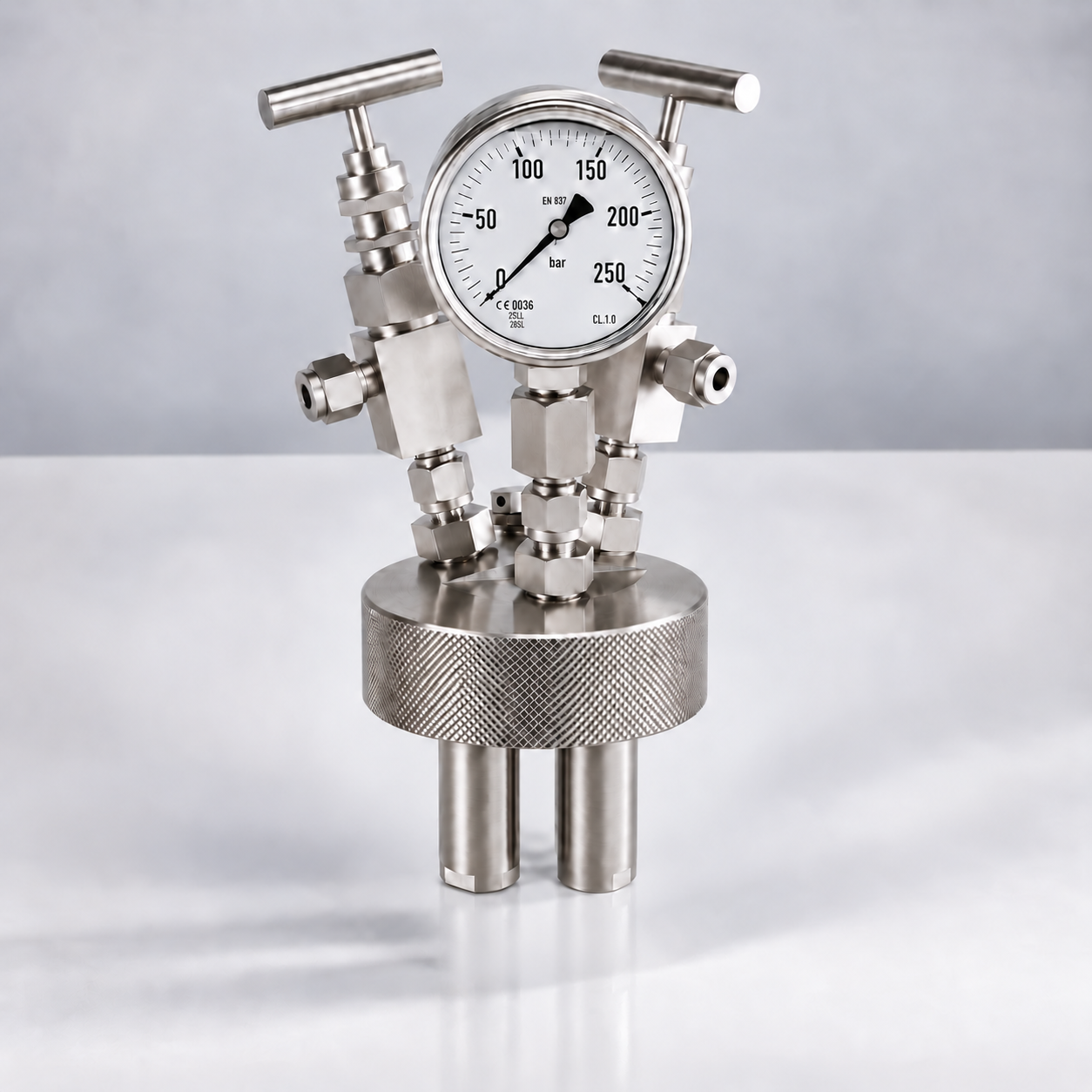
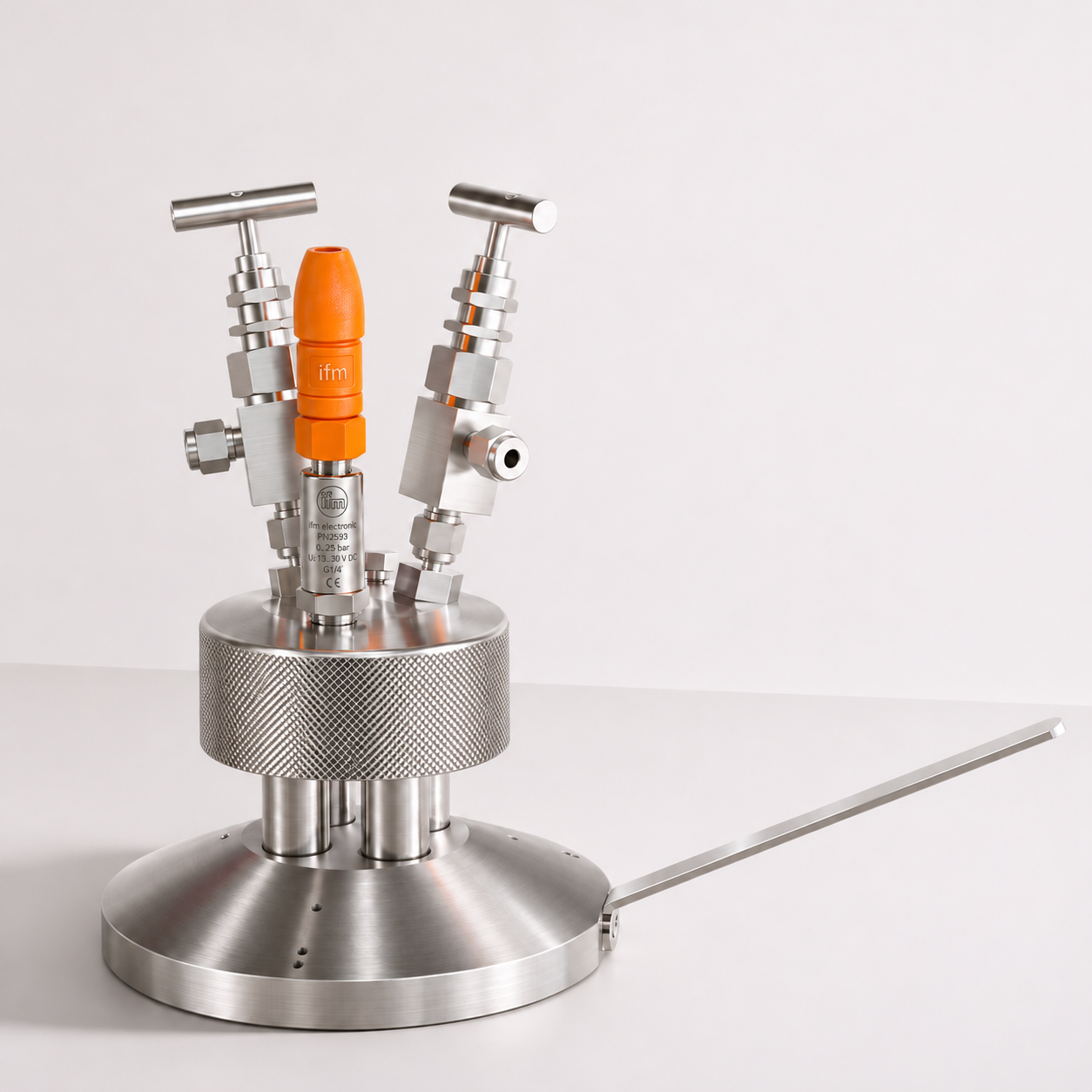
In the standard configuration, parallel reactors are supplied with one or more rupture discs and pressure gauges or pressure sensors. Components are available in 316 stainless steel or Hastelloy C276, depending on the selected configuration.
When pressure sensors are used instead of pressure gauges, it is possible to continuously record pressure changes during experiments using a data acquisition system.
- Safety device: rupture disc
- Pressure measurement: pressure gauge or pressure sensor
- Valves: needle valves
- Material configuration: 316 stainless steel or Hastelloy C276
MPR-4IP-PT multi-cell reactor with four pressure sensors – TENNAD
Compare Multiple Experiments and Record Pressure in Parallel
With 2 or 4 cells in standard configurations or 6, 8, 10 or 12 positions in custom configurations, MPR reactors are designed for studies requiring comparisons of several experimental conditions, formulations or reaction parameters in parallel. Standard models operate at a common temperature across all positions, with shared or independent pressure depending on the version. Specifications for custom models are defined with the laboratory.
To monitor each experiment, versions equipped with pressure sensors may be connected to a data acquisition system that records pressure changes over time. Versions with pressure gauges provide a direct pressure reading. The 9 standard MPR configurations shown in the table offer a choice of 2 or 4 positions and different measurement or cooling options. For larger experimental campaigns, TENNAD offers custom multi-position reactors with 6, 8, 10 or 12 cells.
Catalysis, Hydrogenation and Catalyst Screening in Parallel Reactors
A high-pressure parallel multi-cell reactor makes it possible to investigate several low-volume experiments within the same experimental campaign. Standard 2- or 4-position MPR models are particularly suitable for laboratories wishing to compare results at a common temperature, with either shared or independent pressure depending on the version. TENNAD can also design custom multi-cell reactors with 6, 8, 10 or 12 positions to carry out more parallel experiments, according to the technical specifications defined for each project.
- Catalyst screening: comparison of different catalysts or formulations in parallel under defined experimental conditions.
- Catalytic hydrogenation: reaction trials using hydrogen (H₂) with a suitable configuration and appropriate safety devices.
- Parallel chemical synthesis: comparison of synthetic routes, solvents or reaction parameters using low-volume samples.
- Process optimization: investigation of the effects of formulation, pressure and operating parameters across multiple cells.
- Reactions under gas pressure and gas–liquid reactions: pressurized chemistry studies according to the selected fluids, stirring arrangement and accessories.
This multi-position arrangement is particularly useful for research and development (R&D), feasibility studies and the selection of reaction conditions before larger-scale experiments.
High-Pressure Multi-Cell Reactors for Hydrogen (H₂), CO₂ and Other Gases
TENNAD develops parallel reactors for experiments under gas pressure according to the reaction, pressure, temperature and material compatibility. MPR multi-cell reactors may be configured for applications involving the following fluids, among others:
- Hydrogen (H₂): catalytic hydrogenation, reduction reactions and catalyst evaluation under pressure.
- Carbon dioxide (CO₂): studies of reactions under compressed CO₂, CO₂ conversion and catalysis trials, depending on process conditions.
- Nitrogen (N₂) and argon (Ar): inerting, purging, pressurization and experiments under a protective atmosphere.
- Carbon monoxide (CO) and H₂/CO mixtures: catalysis and carbonylation projects requiring specific configuration and safety assessments.
- Oxygen (O₂), methane (CH₄), ethylene (C₂H₄), ammonia (NH₃) and other fluids: feasibility to be assessed case by case according to chemical compatibility and the required safety equipment.
Compatibility must be confirmed: an equipment item's pressure rating does not, by itself, guarantee suitability for every gas. Materials, seals, valves, sensors and safety devices must be specified for each application, especially when using reactive, toxic or oxidizing gases, or gas mixtures.
For other volumes or experiments performed in a single vessel, explore TENNAD's high-pressure reactors and laboratory autoclaves.
Interested in Our MPR High-Pressure Multi-Cell Reactors?
Contact the TENNAD team to specify a parallel multi-cell reactor suited to your experiments: 2 or 4 standard positions, or 6, 8, 10 or 12 custom positions for your R&D project.
Contact us